How do I find a pharmacy or medical help in Seoul while recovering?
Pharmacies in Seoul are marked with the sign 약국 and are common in most neighbourhoods. Bring your clinic's aftercare note when you visit one, call 119 for emergencies, and use the 1330 Korea Travel Hotline when you need interpretation or general help.
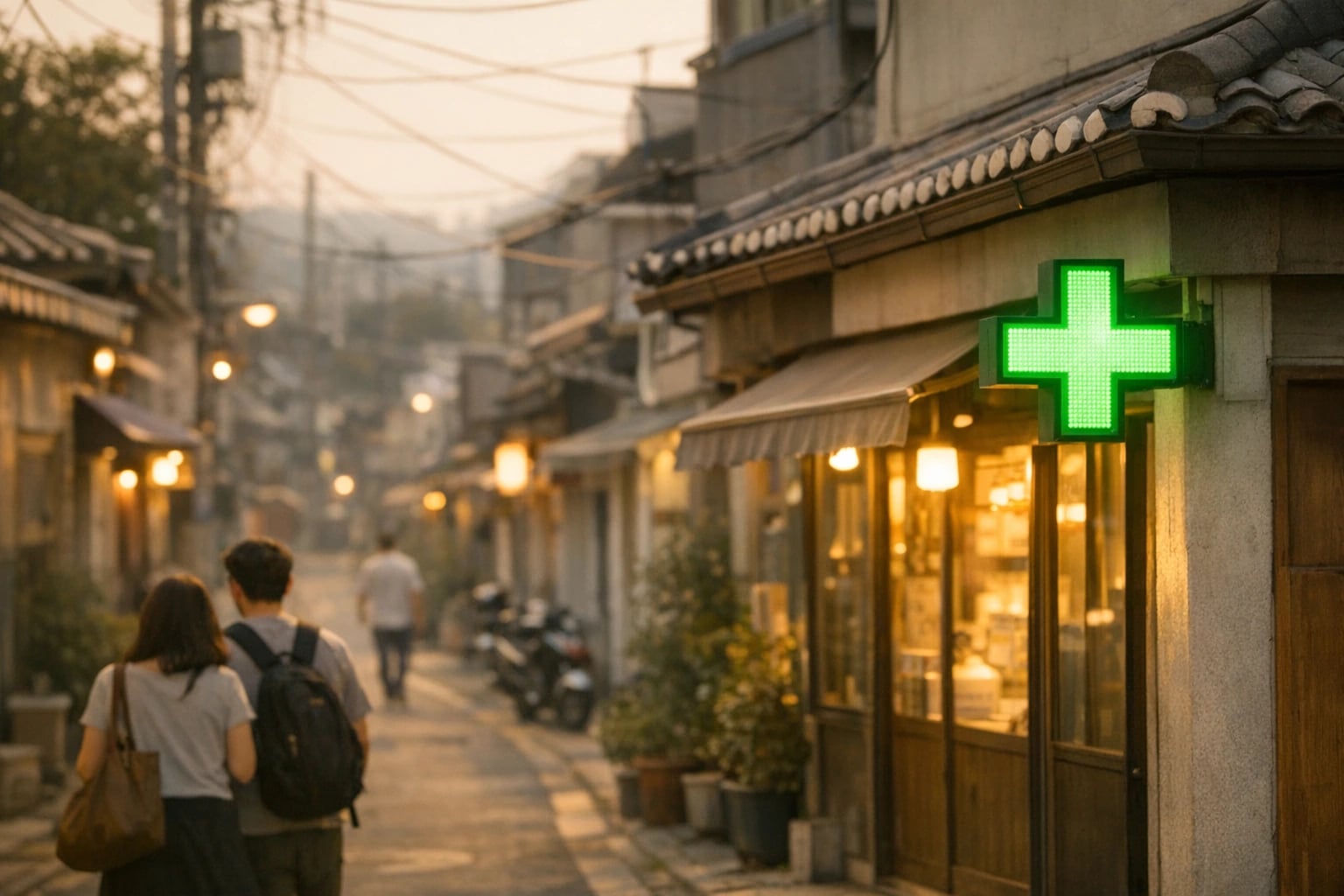
Spotting a pharmacy
Look for the Korean word 약국, which means pharmacy. It usually appears on a sign above a small shop front, often with the character 약 on its own in a large, bright sign. Pharmacies are often found near clinics and hospitals, along main streets, and inside or near subway stations.
Opening hours vary. Many close in the evening, and fewer are open late at night or on Sundays and public holidays. A Korean map app can show nearby pharmacies and their hours, though it is worth checking before you rely on it.
- Search for 약국 in a Korean map app
- Check opening hours, especially at night and on holidays
- Look near hospitals and clinic buildings
What to bring
Bring the aftercare note or prescription from your clinic. This tells the pharmacist what treatment you had and what was prescribed, which helps them understand your situation even if you share little common language.
If you have no written note, show the pharmacist your treated area and use a translation app to explain what was done and what you are experiencing. Bringing your passport may help if a prescription needs to be filled.
What pharmacists can and cannot do
Pharmacists can fill prescriptions and offer advice on over-the-counter items. They are not a replacement for the doctor who treated you. If you have a concern about your treated skin, the clinic should usually be your first call.
Some medicines that are available over the counter in other countries may need a prescription in Korea, and the reverse can also be true. Do not assume a product you use at home is available or the same here.
When to contact your clinic
Contact the clinic if you notice increasing pain, swelling that keeps growing, spreading redness, pus, fever, blistering, or anything that worries you. These signs may need prompt attention from a doctor.
Save the clinic's phone number and any messaging contact before you leave the appointment, and ask whether they can be reached in the evening or on weekends. Knowing this in advance reduces stress if something comes up.
- Save the clinic's phone number and messaging contact
- Ask about after-hours contact options
- Keep your treatment details written down
Preparing before you need help
It is easier to deal with a worry when you have already gathered what you would need. On your first day, find the pharmacy nearest your accommodation and note its hours. Save the clinic's contact details, the address of where you are staying in Korean, and the two help numbers described below in your phone.
Check whether your travel insurance covers medical care related to elective procedures, since some policies exclude it. Knowing this in advance helps you decide where to go and how to keep the right paperwork if you do need care.
- Locate the nearest 약국 on arrival
- Save your accommodation address in Korean
- Review what your travel insurance covers
Emergencies and the travel hotline
In an emergency, call 119 for an ambulance. This is the number for urgent medical and fire emergencies in Korea. If you have trouble breathing, swelling of the face or throat, sudden vision changes, or other severe symptoms, do not wait.
The 1330 Korea Travel Hotline offers tourist information and interpretation support in several languages. It can help when you need to communicate with a pharmacy, clinic or hospital, or when you are unsure where to go.