Can I stay in Myeongdong or Hongdae and still get to a clinic easily?
Yes, many visitors stay in Myeongdong or Hongdae and travel south of the river for clinic appointments. The trip usually takes a moderate stretch of time by subway with a transfer or two, and taxis are an option when you would rather avoid stairs and crowds after a treatment.
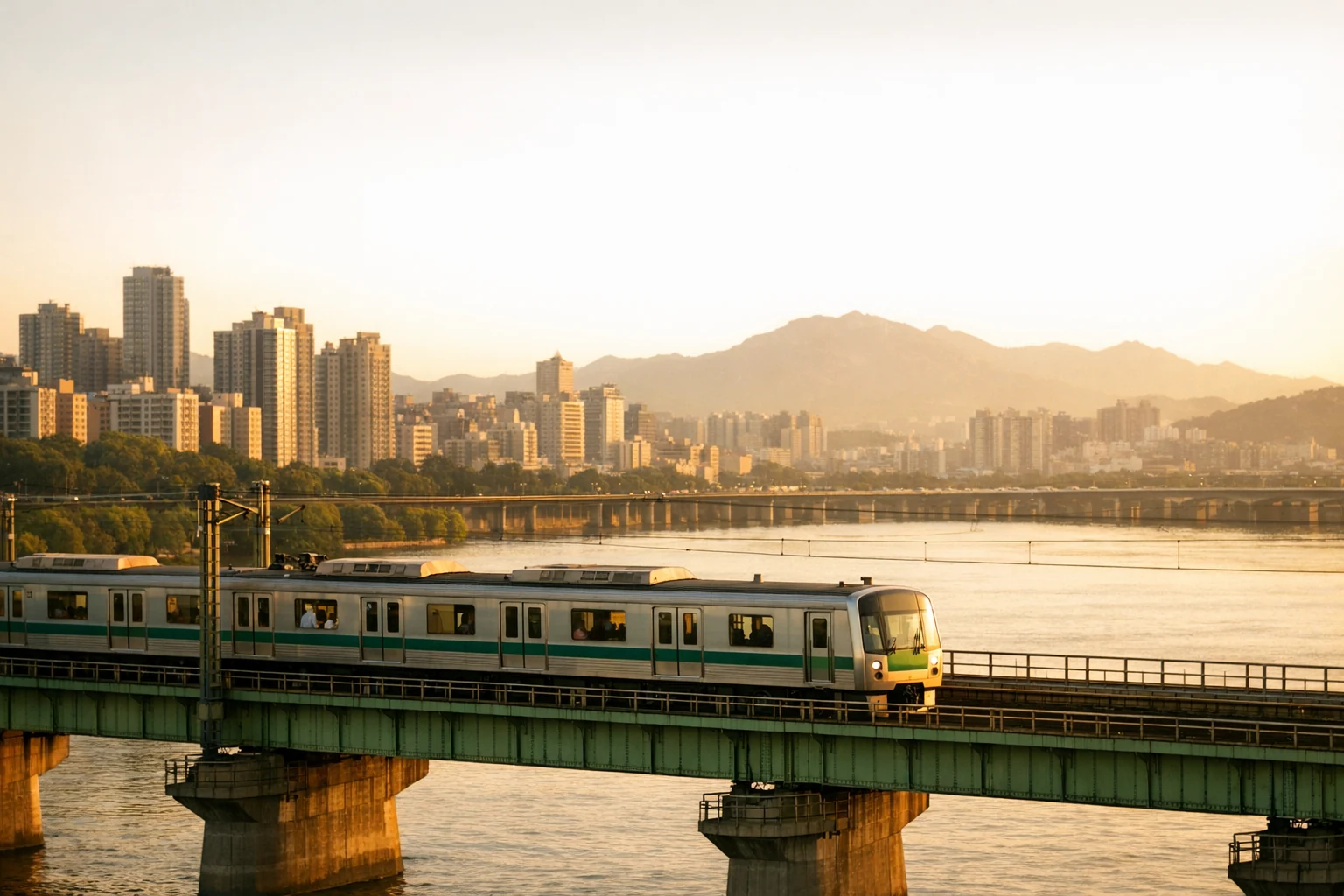
Why travelers often stay north of the river
Myeongdong is central, close to palaces and markets, and convenient for first-time visitors. Hongdae has a younger, lively feel with music, street performers and late-night food. Both are popular bases, and staying there does not rule out visiting clinics in Gangnam, Sinsa or Apgujeong.
There are also clinics in Myeongdong and around Hongdae, so some travelers find a suitable option close to where they sleep. Whichever area you choose, the journey to your appointment is worth planning in advance.
Getting south from Myeongdong
From Myeongdong on Line 4, many routes to Gangnam involve a transfer. Line 4 connects with Line 3 and Line 2 at different points, and the map app will suggest the quickest route for your destination. Euljiro 1-ga on Line 2 is also walkable from parts of Myeongdong, and Line 2 runs directly to Gangnam Station, though the ride is fairly long.
Sinsa and Apgujeong on Line 3 are reachable by transferring onto that line. Overall, expect a trip that is longer than a quick hop but comfortably manageable, plus the walk from the station to the clinic.
- Line 4 from Myeongdong with a transfer to Line 3 or Line 2
- Line 2 from Euljiro 1-ga directly to Gangnam Station
- Allow extra time for walking between platforms at transfers
Getting south from Hongdae
Hongik Univ. Station is on Line 2, the Airport Railroad, and the Gyeongui-Jungang Line. Line 2 loops round to Gangnam without a transfer, but it takes a while because it travels across much of the city. For Sinsa or Apgujeong, a transfer to Line 3 is usually needed.
Hongdae is further from the southern clinic areas than Myeongdong, so give yourself a generous cushion before the appointment, especially if you have never made the trip before.
Transfers when you are not feeling your freshest
On the way to the clinic, transfers are just part of the ride. Coming back after a procedure is different. Long corridors, stairs and crowded carriages can feel tiring if your face is swollen or tender, or if you are wearing a hat and mask to protect treated skin.
Most stations have lifts and escalators, though they are not always next to the exit you want. If you know you will feel tired, plan a route with fewer changes even if it takes a little longer, or use a taxi for the return journey.
Planning the day around the commute
Because a cross-river trip takes a chunk of the day, it can make sense to pair the appointment with something nearby instead of travelling back and forth twice. A gallery or cafe close to the clinic can fill the gap before your slot, and you can head home straight after.
If you have a procedure with a longer recovery, consider moving to accommodation south of the river for those nights. Some travelers split their stay, spending the first days near palaces and markets and the later days closer to the clinic.
Using taxis across the river
A taxi from central Seoul or Hongdae to the clinic areas south of the river can be a comfortable choice, especially outside the morning and evening rush. Traffic on the bridges and main roads can be heavy at peak times, so the journey may not always be faster than the subway.
Have your destination ready in Korean on your phone, and save the clinic's address and your accommodation's address as favourites. Taxi apps commonly used in Seoul let you set the destination in advance, which helps when communication is difficult.
- Save both addresses in Korean before the day
- Avoid rush hours if you want a smoother ride
- Consider a taxi home and the subway out