How do I get from the airport to Gangnam, and back after a treatment?
From Incheon, most visitors take an airport limousine bus straight to the Gangnam area, ride the Airport Railroad and switch to the subway, or take a taxi. From Gimpo, the subway is simpler. On the way back to the airport after a treatment, the bus or a taxi usually means fewer stairs, transfers and crowds.
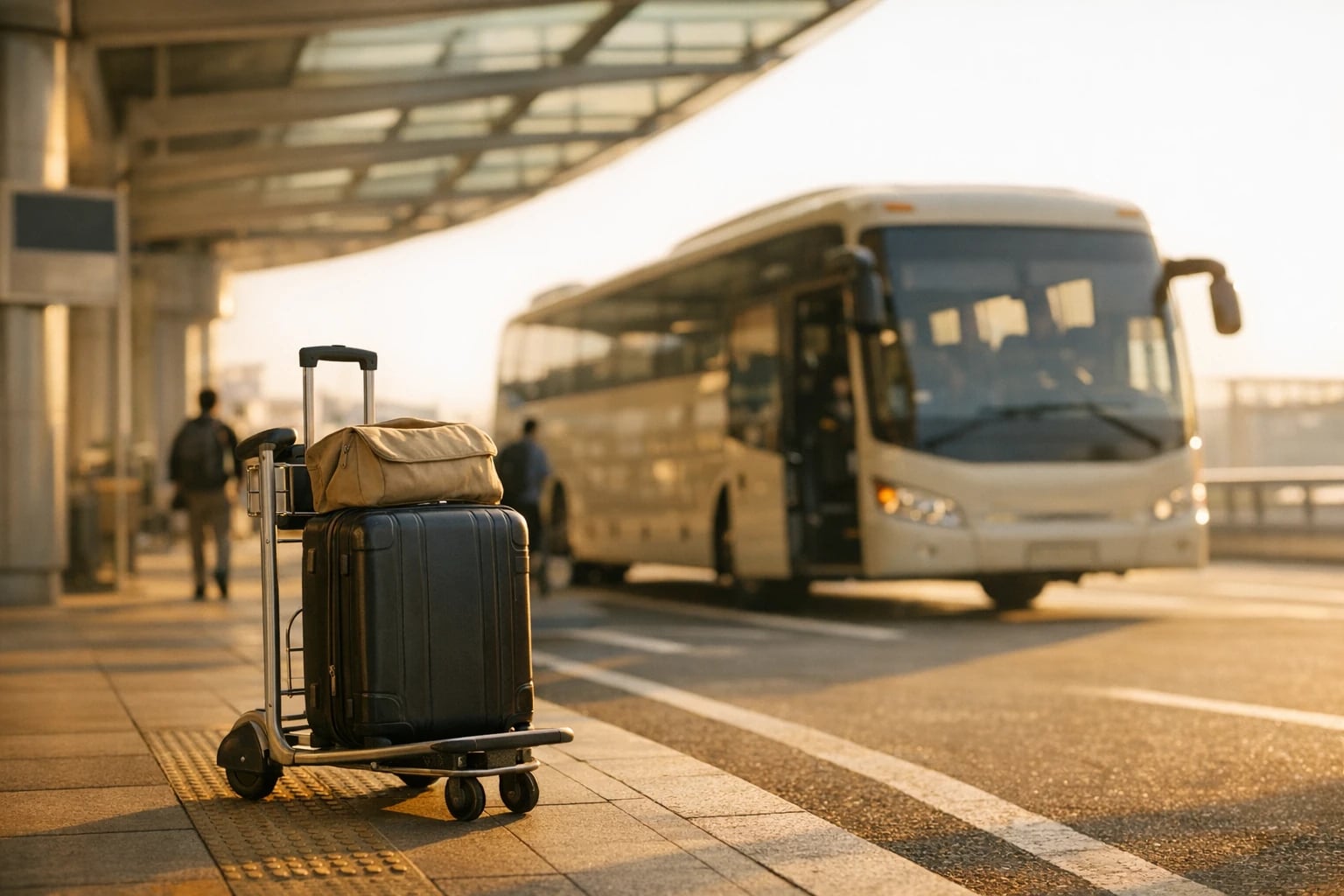
Two airports, different distances
Most international flights land at Incheon, which sits on an island to the west of Seoul. The trip into Gangnam is a long one by any method, so expect it to take well over an hour, and longer in heavy traffic.
Gimpo is much closer to the city and handles domestic routes plus some regional international flights. If you are flying in from a nearby country, check which airport your ticket uses before planning the transfer.
Whichever airport you use, write down the name of your accommodation and its address in Korean before you leave home. That one note helps at bus counters, taxi ranks and information desks.
The airport limousine bus
Airport limousine buses run from Incheon to many parts of Seoul, including several stops around Gangnam. You buy a ticket at the counter or machine in the arrivals hall, staff load your suitcase underneath, and you sit in a reclining seat for the whole ride.
This is often the easiest choice with luggage, because there are no stairs or transfers. Check the route number that stops nearest your accommodation, and the timetable, as some routes run less often late at night.
- No transfers and help with luggage
- Several routes stop around the Gangnam area
- Check the stop nearest your hotel before you land
Airport Railroad and the subway
The Airport Railroad (AREX) connects Incheon with Gimpo Airport, Hongik Univ. Station and Seoul Station. From there you continue on the subway to Gangnam. It is reliable and avoids road traffic, but you will carry your bags through at least one transfer.
From Gimpo Airport, Line 9 runs along the south side of the river toward the Gangnam area, which makes the subway an easy option from that airport. Lifts are available at most stations, though they are sometimes a short walk from the platform you arrive on.
Taxis from the airport
Taxi ranks sit outside the arrivals halls, with separate queues for regular taxis and larger or deluxe ones. A taxi takes you door to door, which is welcome after a long flight, but it usually costs more than the bus or train, and traffic into Seoul can be slow at rush hour.
Have your accommodation's address in Korean ready on your phone. Some visitors arrange an airport pickup through their hotel or use a taxi-hailing app that offers English, which lets you set the destination before the ride.
Choosing transport home after a treatment
On departure day, think about how your skin and energy are likely to feel. Dragging a suitcase through crowded transfers with a tender face is tiring, so many people prefer the limousine bus or a taxi on the way out, even if they used the subway on arrival.
Allow plenty of time. Traffic, check-in queues and security can all take longer than expected, and rushing raises stress at a moment when you would rather stay calm. Keep your aftercare items and the clinic's contact details in your hand luggage.
- Pick a route with as few transfers as possible
- Avoid the morning and evening rush if you can
- Pack aftercare items and clinic contacts in your hand luggage
Arrival day is for settling in
However you travel in, try not to book a consultation or treatment on the day you land. Check in, eat something, and get a good night's sleep. Your judgement and your skin will both be in better shape the next day.
Use the first evening for small practical jobs instead: buy a transit card, find the nearest pharmacy and convenience store, and walk the route to the station you will use on clinic day.